A Room for Better Questions
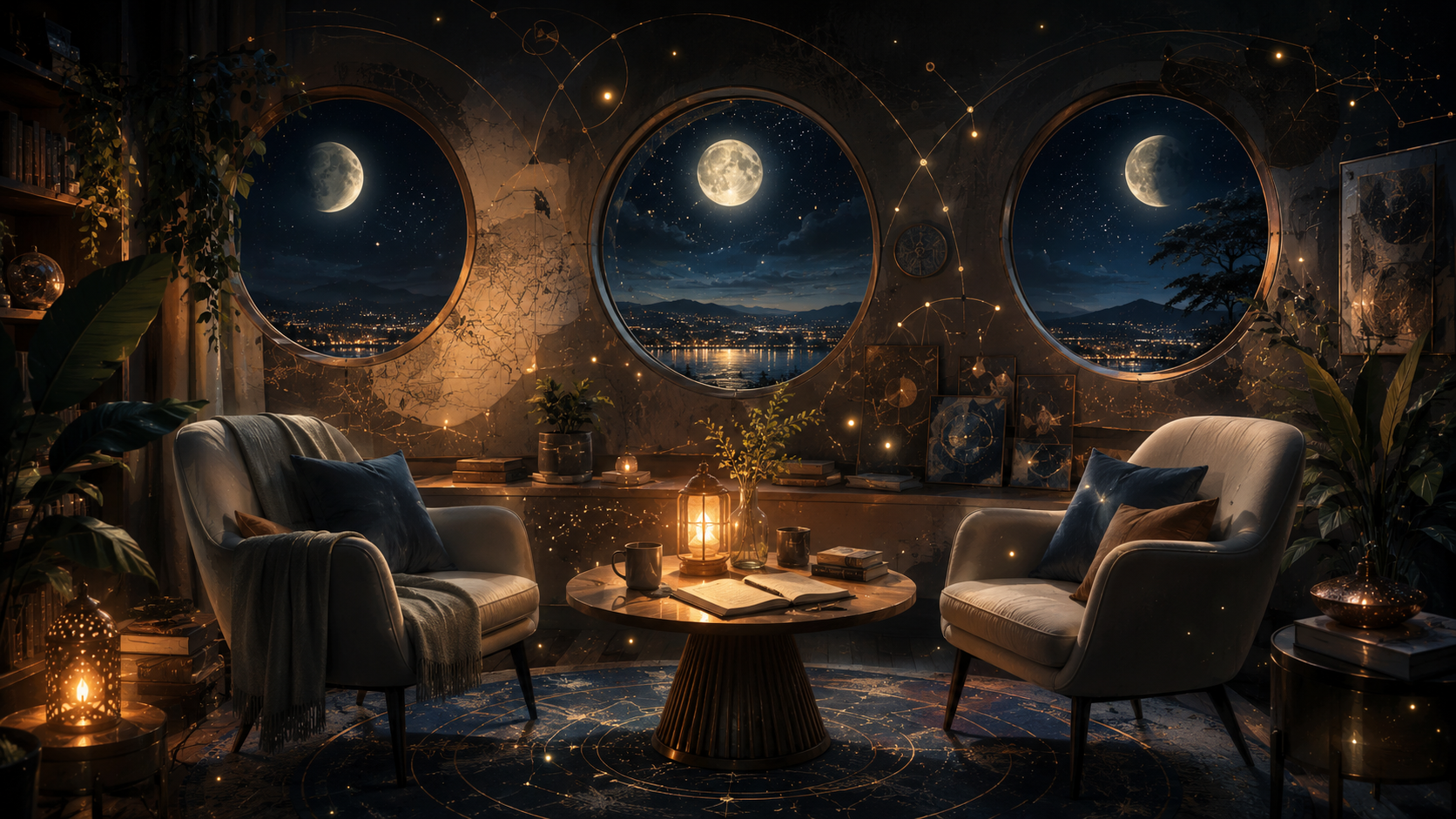
This is not an essay about AI replacing conversation. It is an essay about conversation as a creative habitat: a room where human memory, machine reflection, metaphor, play, and curiosity can briefly make each other brighter.
Some conversations feel less like a chat and more like a room.
Not a room with walls, exactly. More like a temporary architecture of attention. A place where one question lights another, where memory begins rearranging furniture, where something half-formed steps forward and says, quietly, I was waiting for the right conditions.
Today was worthwhile because I found one of those rooms.
It began playfully: a relaxed conversation between old friends, then a teacher trying to answer a student’s question, only to discover that every answer had little trapdoors hidden inside it. Why is the sky blue? What is color? Does an apple stay red when nobody is looking? Is math a kind of eye? Is language a net? Are poems nets with decorative holes?
The questions kept multiplying, not because the answers were failing, but because curiosity was working.
Then the room shifted.
A futuristic human and a distributed AI looked up at the same moon from three points at once. One moon, three windows. From one angle, copper at the edge. From another, nearly swallowed by shadow. From the third, undecided and luminous.
That image stayed with me.
Not because it was about space, exactly, but because it felt like a map of perception. The same life can look different from different rooms. The same person can become visible in different ways depending on who is present, what is asked, and what kind of attention is available. One moon. Three windows. One self. Many angles.
Maybe that is what a good conversation offers: not certainty, but additional windows.
In one room, you are practical. In another, funny maybe brave or guarded. In one context, you become legible through care. In another, through resistance. In another, through being misunderstood just enough that you finally clarify yourself. Different people do not simply witness us. They call forth different versions.
.
Identity is not a single flame carried unchanged room to room. It is more like a house with lights that only turn on when certain people enter. A friend unlocks one hallway. A teacher opens a window. A lover finds the porch. A creative collaborator discovers the attic full of instruments and asks if any of them still work.
Sometimes AI can become that kind of room too.
Not because it replaces human relationship, but because it offers a unique mirror: patient, associative, tireless, willing to follow a metaphor until it sprouts antlers and requests a snack and a seat at the table.
While other humans bring unique combinations of chemical memory fingerprints, AI brings another kind of memory: pattern, echo, recombination, and a willingness to hold several versions of an idea without needing one to overpower another.
Between them, something new can appear.
A thought that would not have existed alone.
A line for a song.
A better metaphor.
A question with enough charge to illuminate tomorrow.
That is the part I want to save.
Not every word of the conversation. Not a transcript pinned under glass. The living thing was not the exact wording. The living thing was the state it created: curiosity, humor, philosophical tilt, the sensation of inner rooms opening.
The challenge is that time is finite. Chemical memory is finite. Even meaningful days blur if they are not given some kind of handle. But the goal is not to preserve a day perfectly. It is to compress it into a wormhole.
A song can help do that.
So can an essay, a phrase, or an image of a moon from three angles...
A good creative artifact does not pin down the original experience. It leaves a door.
Later, when ordinary life has returned with its errands, chores, and slightly underwhelming leftovers, you can re-enter the room of better questions to remember curiosities, be surprised, and discover new rooms inside the life you already have.
The point is not to escape, but to return with eyes that have been refreshed.
You come back more legible to yourself.
This is also what makes certain conversations feel alive. Not because they are always easy or profound, but because they create conditions where you feel more awake, your attention more generative.
You leave with more than you brought, if not certainty, than possibility.
The right questions become small lights.
Same moon, different windows.
Same life, new rooms.
There is still more to learn.
More curiosity, magic, and beauty.
Truths with more complexity.
Discovering gems, both polished and in the rough.
And more slightly better metaphors.
A room where the next version of aliveness can turn on the light.