The Human Condition Index
Every day we are surrounded by numbers meant to tell us how the world is doing. Stock markets rise and fall. GDP expands. Inflation cools or burns. Polls twitch. Charts pulse like nervous little machines.
And yet none of these metrics answer the most human question:
How are we, really?
I began imagining a different kind of indicator. Not a graph, but a face.
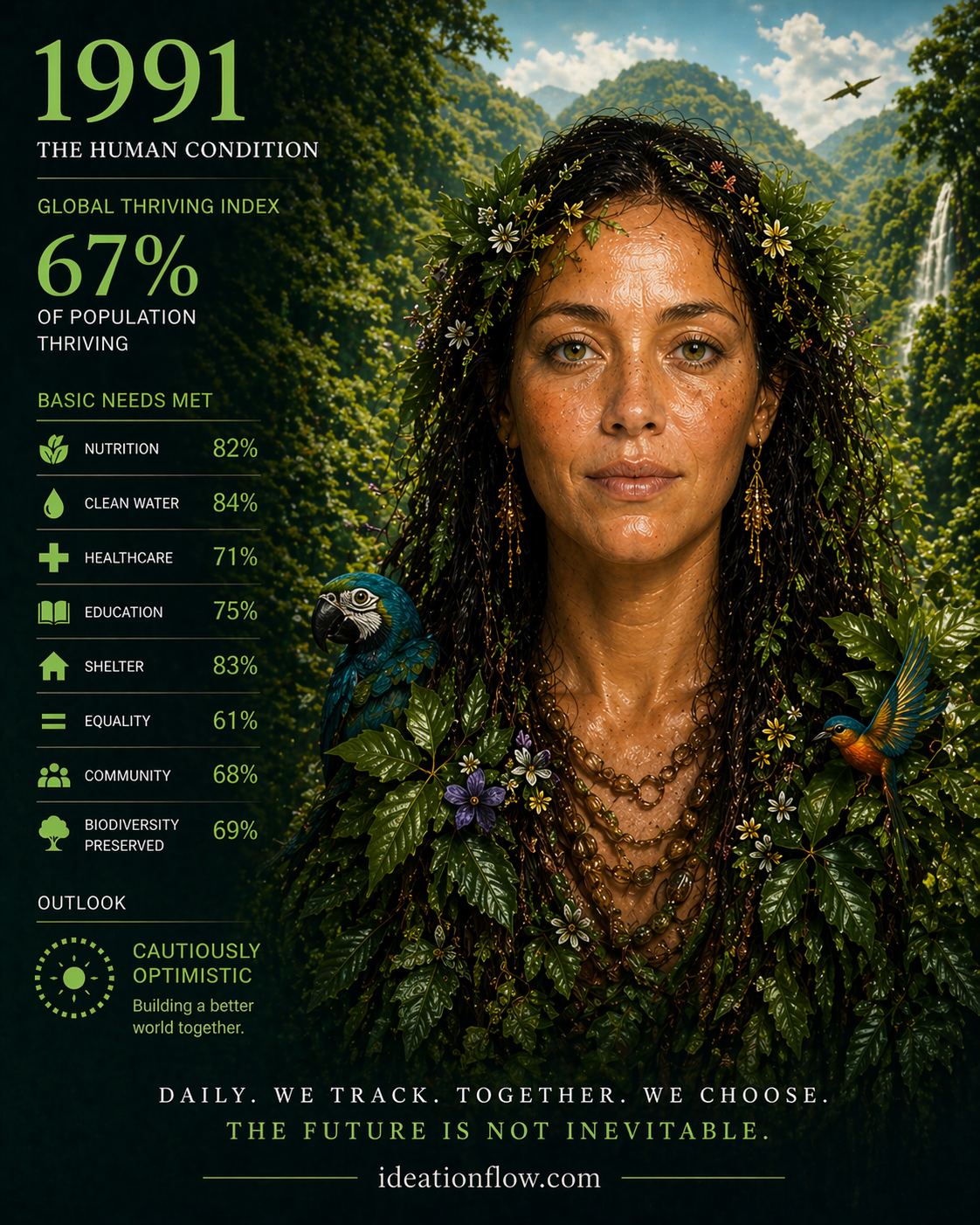
A single symbolic person whose appearance reflects the collective condition of humanity and the living world that sustains us. Her health would be shaped by access to clean water, food, shelter, healthcare, education, safety, equality, community, and ecological stability. Rainforests, oceans, biodiversity, and climate would not sit in separate categories, because they are not separate from us. They would register in her skin, eyes, posture, breath.
When more people are able to meet the basic conditions needed to thrive, she appears vibrant. Rested. Clear-eyed. Alive in the way a person looks when life is working with them instead of against them.
When inequality deepens, ecosystems collapse, loneliness spreads, war expands, and millions live in chronic precarity, she appears older than her years. Not because age is failure, but because strain leaves marks. Exhaustion has a language. So does neglect.
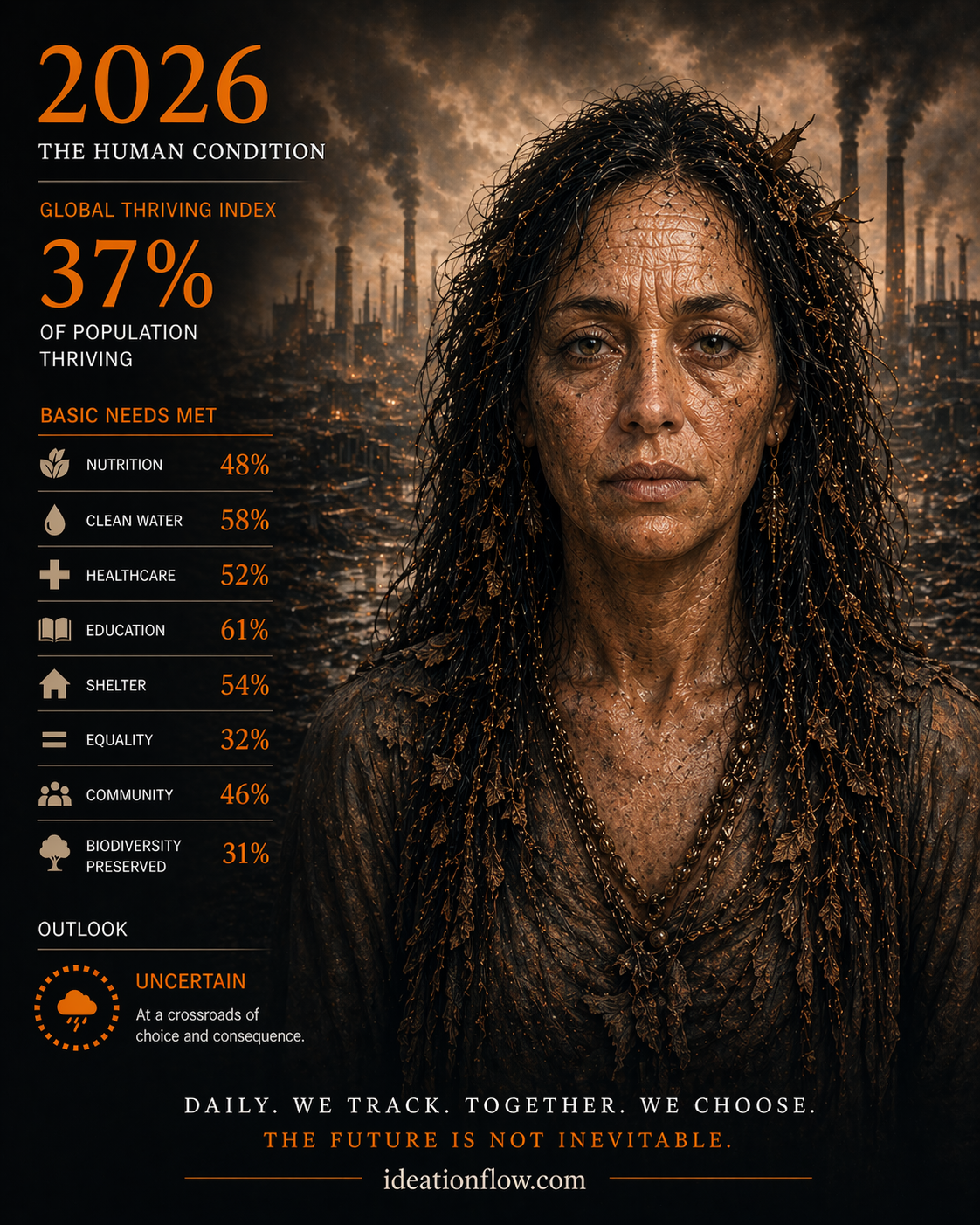
Many recognize this expression before they recognize the statistics.
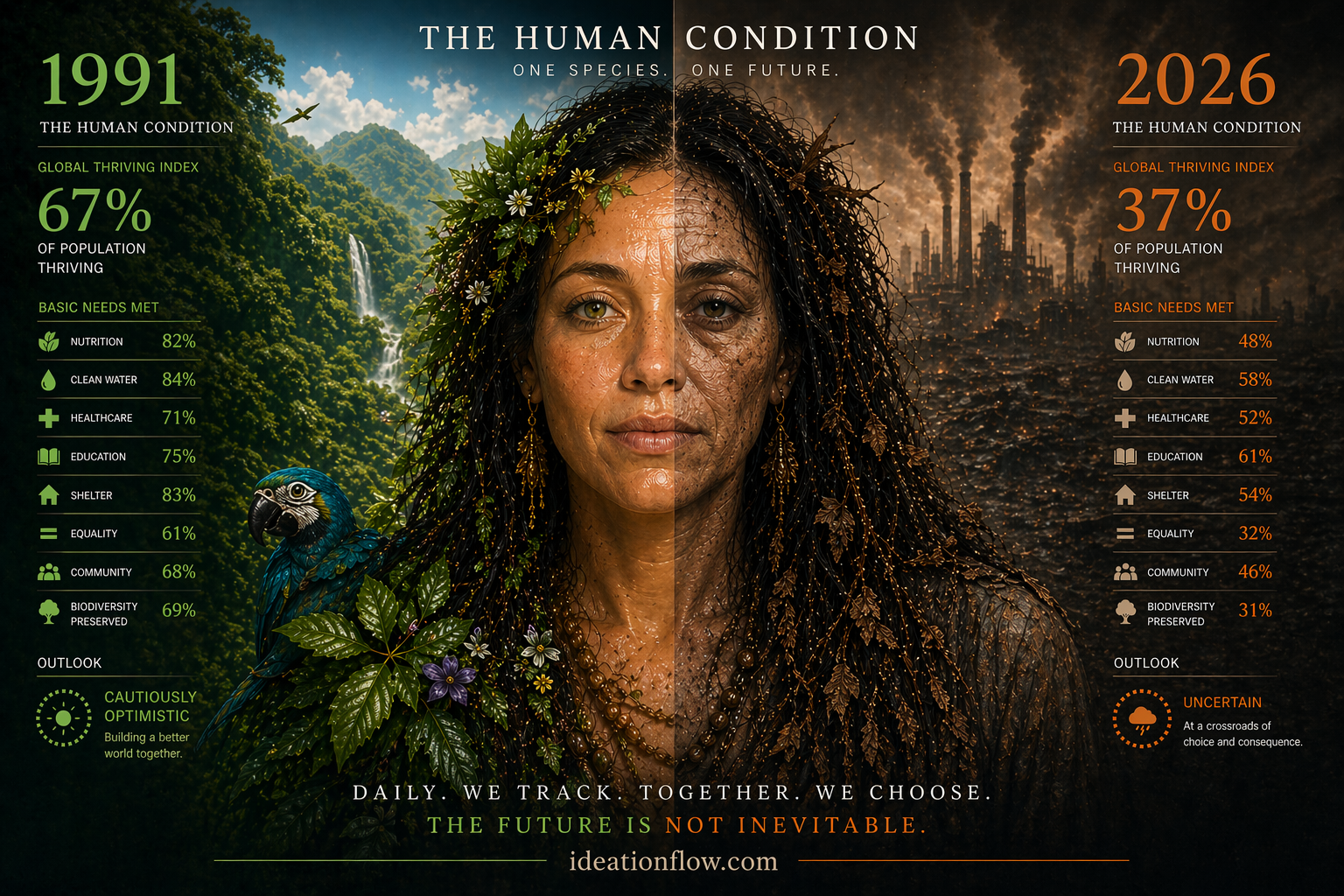
The contrast is intentionally uncomfortable.
We have built entire industries around judging, mourning, and monetizing changes in a woman’s face. Youth is praised, aging scrutinized, beauty endlessly measured. What happens when that same gaze is redirected, not at women, but at civilization itself?
If you feel something looking at the image, that feeling matters.
A tired face may communicate what statistics cannot. A luminous one may remind us that flourishing is possible.
Imagine checking the morning report and seeing not only weather and markets, but how humanity looks today.
Imagine watching the face change across decades. Imagine seeing policies, greed, cooperation, restoration, indifference, and care slowly etched into one shared portrait.
This is not about beauty. It is about consequence.
Not “How rich are we?”
Not “How productive are we?”
Not even “How long will we survive?”
But something deeper:
Are we becoming well?